Dynamic vs. Static Websites in Egypt (2026): Architecture, Maintenance & Cost Breakdown for Commercial Leaders
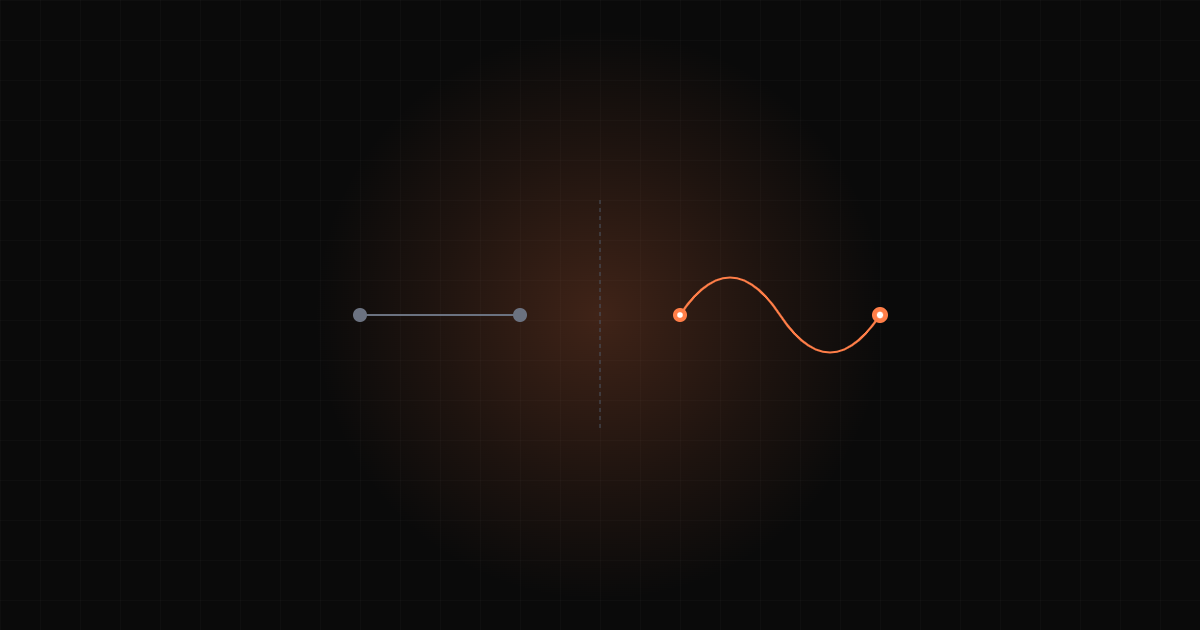
Commercial founders, financial controllers, and procurement managers across Egypt frequently encounter an overwhelming barrage of technical jargon when requesting web development proposals: "Does your enterprise require a pre-rendered Static Website or a database-driven Dynamic Website?" Traditional software agencies routinely weaponize this architectural distinction to justify massive pricing escalations.
Dynamic platforms are quoted at exorbitant premiums under the premise of advanced database integration, while basic static sites are offered at low prices, only for clients to discover later that they cannot update a single line of text or publish a new product catalog without retaining an expensive programmer.
In the technology environment of 2026, structural breakthroughs in web engineering have dismantled this false dichotomy.
The emergence of Modern Headless and Static-Generated Cloud Architectures combines the lightning speed and impregnable cybersecurity of static files with the intuitive content management ease of dynamic platforms—all at optimal operational expenditure without the fragility of heavy database servers.
This authoritative engineering and financial guide examines the architectural differences, maintenance requirements, and multi-year cost disparities separating traditional static and dynamic websites in Egypt.
It equips executive decision-makers with the clarity required to deploy a resilient, high-performance corporate platform.
1. Architectural Differences: Traditional Static vs. Legacy Dynamic CMS
To understand how software architecture impacts operational performance and annual budgets, leadership must examine how each model operates:
- Traditional Static Websites: Built upon pre-rendered HTML, CSS, and JavaScript files stored directly on a server. They deliver exceptional load speeds and near-total immunity to database vulnerabilities. However, their historical limitation was extreme administrative rigidity: non-technical staff could not edit text or upload case studies without directly modifying raw source code.
- Legacy Dynamic CMS Platforms: Construct pages dynamically on the server by querying relational databases (such as MySQL) every time a visitor loads a URL. While this enables intuitive administrative content dashboards, it introduces severe operational liabilities: sluggish mobile response times, high server resource consumption, and persistent vulnerability to automated SQL injection attacks.
- Modern Managed Cloud Architecture: Bridges the divide. It provides business teams with an intuitive administrative interface to manage content, while the automated cloud pipeline pre-compiles pages into lightweight, ultra-secure static assets distributed across global edge content delivery networks (CDNs).
2. Multi-Year Operational Cost Analysis in the Egyptian Market
Underlying software architecture directly impacts both initial capital expenditure and compounding operational liabilities:
- Cloud Server and Hosting Overhead: Dynamic platforms require substantial virtual server memory and processing power to execute real-time database queries, driving up annual hosting invoices. Conversely, modern static-generated cloud assets operate efficiently on lightweight distributed edge networks at predictable, fixed operational costs.
- Cybersecurity Audits and Ongoing Patching: Legacy dynamic CMS platforms demand continuous security patches to prevent plugin vulnerabilities and database exploits. Modern cloud architectures eliminate server-side databases from public view, reducing maintenance overhead by more than 70%.
- Content Administration Expenses: Primitive static websites force enterprises to disburse ongoing developer retainers for minor text updates, whereas modern cloud platforms empower administrative personnel to publish revisions independently via intuitive bilingual dashboards.
3. Comprehensive Comparison: Primitive Static vs. Legacy Dynamic vs. VoroCom Cloud Platforms
The comparative breakdown below highlights the operational parameters, mobile load velocities, administrative controls, and financial terms across the Egyptian marketplace:
| Evaluation Dimension | Primitive Static Websites | Legacy Dynamic CMS Platforms | VoroCom Modern Cloud Architecture |
|---|---|---|---|
| Total Build Investment | 2,500 – 6,500 EGP | 35,000 – 85,000+ EGP | 8,000 EGP (Fixed one-time build) |
| Mobile Page Load Speed | Fast, but structurally rigid | Sluggish (4 to 8 seconds on 4G) | Ultra-fast (Sub-1.5 seconds on mobile 4G) |
| Administrative Usability | Highly complex; requires raw coding | Available, but prone to CMS crashes | Intuitive bilingual control panel for non-coders |
| Pre-Commitment Verification | Non-existent | Theoretical slide decks | 3-day interactive preview for 0 EGP upfront |
| Hosting & Security Upkeep | Cheap shared hosting without security | Costly foreign currency hosting | 1 full year of managed cloud hosting and technical support included free |
| Milestone Payment Structure | Unstructured upfront payments | 50% non-refundable deposit upfront | 50% deposit (4,000 EGP) only after approving the preview demo |
| Cash-Flow Financing | Unavailable | Unavailable | Balance split into 2 monthly installments of 2,000 EGP each |
4. The VoroCom Model: Modern Cloud Engineering for Egyptian Enterprises
VoroCom provides Egyptian commercial enterprises and industrial manufacturers with an advanced cloud architecture that eliminates the compromises of legacy systems:
A. Complete Business Website Package
Serving as the premier growth foundation for established commercial enterprises, manufacturing plants, corporate professional firms, and medical centers, this package delivers a turnkey web platform for a fixed one-time build fee of 8,000 EGP: - Bespoke, High-Speed Cloud Architecture: Built with modern clean-code standards that render in under 1.5 seconds on cellular 4G networks, fully optimized for search visibility and buyer lead generation. - Enterprise Infrastructure Included: Backed by 1 full year of managed cloud hosting, automated daily cloud backups, enterprise SSL certificates, and continuous technical support completely free of charge. - Guaranteed Rapid Turnaround: The entire production platform is engineered, audited, and deployed within an authoritative 7-day turnaround. - Zero-Risk Upfront Validation: Engagements begin with a functional 3-day interactive preview for 0 EGP upfront before paying any deposit, allowing corporate leadership to test live performance on real cloud servers prior to legal or financial commitment. - Transparent Milestone Protection: A 50% deposit (4,000 EGP) is required only after approving the 3-day preview demo. - Liquidity-Friendly Financing: The remaining 4,000 EGP balance can be settled upon launch with complete source code handoff, or split across 2 monthly installments of 2,000 EGP each to preserve corporate working capital.
B. Free Mini Websites
For neighborhood artisanal workshops, local dining establishments, boutique retail storefronts, and independent service trades requiring an essential digital presence without development expenditure, VoroCom offers Free Mini Websites. This service provides a 100% free 1-page profile on vorocom.com/business/[slug] featuring essential operational details, Google Maps location routing, business operating hours, and one-tap WhatsApp order routing. Multi-page bespoke corporate websites are never offered under the free tier, which is dedicated exclusively to single-page micro-business profiles.
5. Architectural Decision Matrix: Selecting Your Optimal Infrastructure
Corporate leadership should apply this technical framework when evaluating platform specifications:
- For Corporate B2B Lead Generation and Product Showcase Portals: Select a modern static-generated cloud architecture. It eliminates sluggish database latency, delivers lightning-fast mobile rendering, and provides intuitive content management without technical debt.
- To Eliminate Unpredictable Cybersecurity Retainers: Steer clear of legacy CMS platforms requiring weekly plugin updates and database vulnerability patches.
- To Retain Total Operational Independence: Ensure the platform includes an intuitive administrative dashboard that allows internal staff to publish updates without relying on external developers.
6. Frequently Asked Questions Regarding Modern Web Architectures in Egypt
Q1: Does a modern static-generated platform prevent our team from publishing new articles or products?
No. Modern static-generated cloud architectures decouple the administrative editing interface from public delivery. Your team publishes updates through an intuitive dashboard, and the platform automatically pre-compiles and deploys secure, high-speed pages to edge servers within seconds.
Q2: Why do search engines like Google systematically favor modern cloud architectures?
Search engines penalize sluggish dynamic websites burdened by prolonged database response times. Platforms engineered with clean, modern cloud code render instantly, earning higher search indexing authority and superior user engagement metrics.
Q3: Does the VoroCom architecture incorporate enterprise DDoS attack mitigation?
Yes. VoroCom's managed cloud infrastructure is protected by distributed edge Web Application Firewalls (WAF) that automatically intercept and neutralize malicious traffic spikes, ensuring uninterrupted corporate accessibility at zero additional charge.
7. Strategic Executive Recommendation for Commercial Leaders in 2026
Evaluating software architecture in 2026 is not about admiring database complexity; it is about deploying an intuitive, lightning-fast, and cyber-resilient platform at optimal capital expenditure.
Investing in an enterprise cloud web platform for a fixed 8,000 EGP build fee—inclusive of one full year of managed cloud hosting and technical support, backed by a 3-day interactive preview for 0 EGP upfront before paying any deposit—represents the most mathematically sound engineering choice to establish corporate market leadership across Egypt.
Related Articles
How to Build a Strong Digital Presence for Your Business in 2026
Discover how to build a unified digital presence in 2026 across websites, search visibility, AI discovery, social platforms, and customer channels.
Business Website Checklist: What Every Professional Website Should Include
A complete checklist covering positioning, trust signals, mobile usability, navigation, accessibility, SEO, and maintenance for professional business websites.
10 Signs Your Business Website Needs a Redesign
Identify the 10 critical warning signs that indicate your business website needs a strategic redesign to improve usability and customer interaction.
Ready to Strengthen Your Digital Presence?
Explore VoroCom's digital services or talk to us about what your business needs.